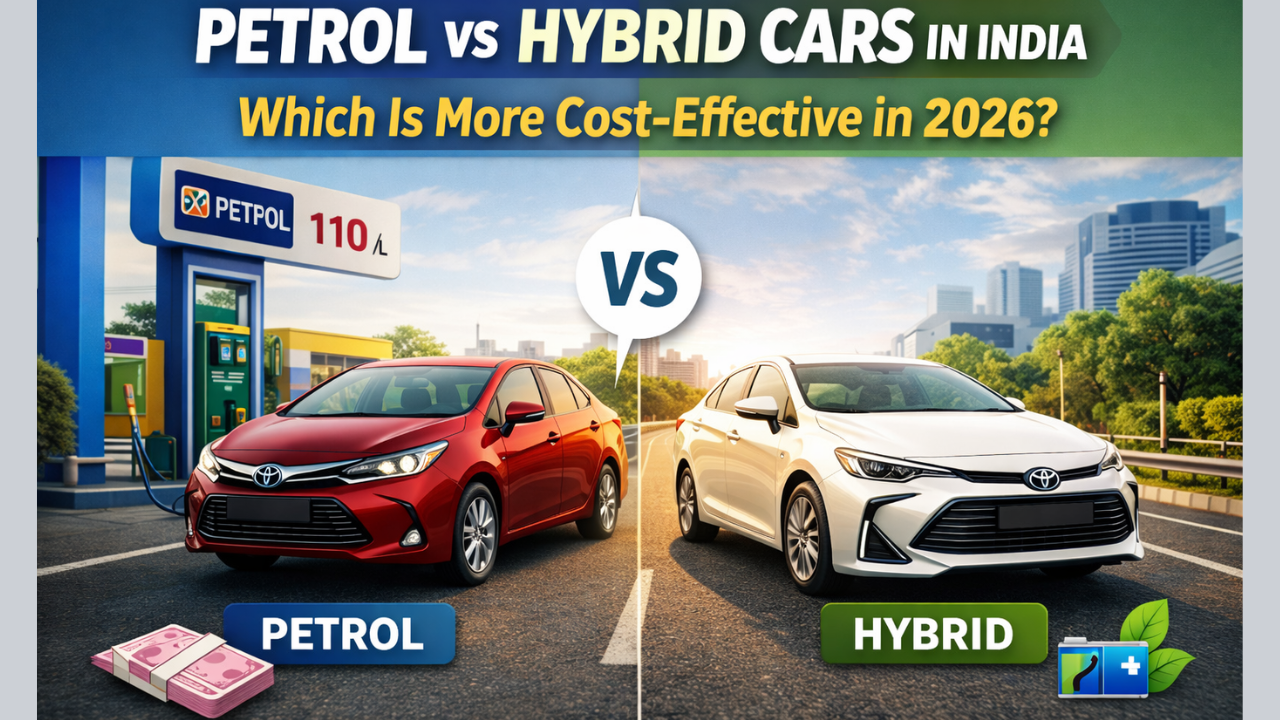
In 2026, Indian car buyers are increasingly confused between petrol and hybrid cars, especially with rising fuel prices and stricter emission norms. While electric vehicles are still not practical for everyone, petrol and hybrid cars remain the most realistic choices for both daily use and long-distance travel. The real question for most families is not technology, but long-term cost and practicality.
Petrol cars are still the most common choice in India due to their lower upfront price and widespread service network. They are easy to maintain, repairs are affordable, and spare parts are available even in smaller towns. For buyers with moderate monthly running and mostly city usage, petrol cars continue to make financial sense in 2026.
Hybrid cars, on the other hand, are gaining attention because of their better fuel efficiency in real-world driving conditions. In traffic-heavy cities, hybrids can significantly reduce fuel consumption by using electric power at low speeds. This makes them attractive for users who drive daily in congested areas and want better mileage without charging anxiety.
However, hybrid cars come with a higher initial cost. Many buyers overlook this and focus only on mileage figures. In reality, the cost difference between a petrol and a hybrid model takes several years to recover through fuel savings. This means hybrids are more suitable for buyers with higher annual running, especially those who clock long daily commutes.
Maintenance is another important factor. Modern hybrid systems are reliable, but repairs can be expensive if something goes wrong outside warranty. Petrol cars remain simpler machines, which makes them easier and cheaper to maintain in the long run, particularly in non-metro areas.
From a highway driving perspective, both petrol and hybrid cars perform well, but petrol engines still feel more predictable at sustained high speeds. Hybrids shine more in city conditions rather than constant highway cruising. Buyers who mostly travel on highways may not fully utilise the hybrid advantage.
In practical terms, petrol cars are still the smarter choice for buyers looking for lower ownership stress and predictable expenses. Hybrid cars make sense for those who drive a lot every day, want better fuel efficiency in traffic, and plan to keep the car for many years.
In 2026, there is no single right answer. The best choice depends on driving pattern, usage area, and long-term ownership plans rather than just fuel type.