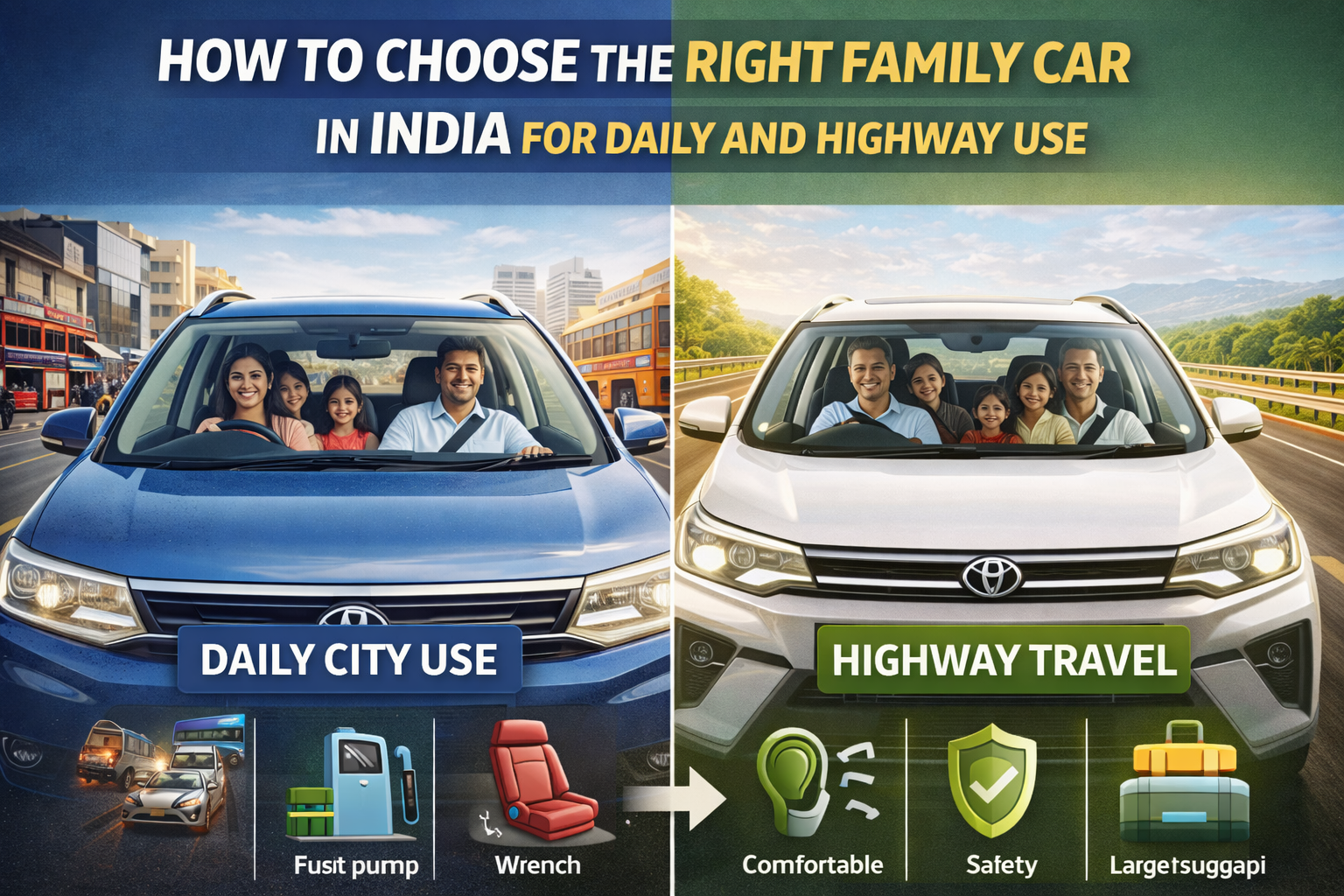
Many car owners in India notice that some cars feel comfortable even after hours of highway driving, while others start feeling tiring within a short time. This difference is not always related to price or brand. In most cases, it comes down to how a car is designed and tuned for real-world driving conditions.
One major reason long drives feel tiring in some cars is poor seating support. Seats that lack proper cushioning or lumbar support cause discomfort in the lower back and thighs. Over long distances, this leads to fatigue even if the road is smooth. Well-designed seats distribute body weight evenly and help the driver stay relaxed.
Cabin noise is another factor that silently affects comfort. Continuous engine noise, tyre hum or wind sound may not feel disturbing initially, but over time it increases mental fatigue. Cars with better insulation and refined engines feel calmer, allowing the driver to remain focused for longer durations.
Ride quality also plays a big role. Cars with stiff suspension setups may feel stable at high speeds, but constant vibrations from road imperfections can become tiring. On the other hand, overly soft suspension can cause excessive body movement, which also leads to discomfort. A balanced setup makes long drives smoother and less stressful.
Driving posture is often ignored but is extremely important. If the steering wheel, pedals and seat position are not well aligned, the driver ends up adjusting constantly. This repeated adjustment causes fatigue during long journeys. Cars that offer a natural driving position reduce physical strain.
Air conditioning performance, especially for rear passengers, affects overall comfort on highways. Uneven cooling or weak rear airflow can make passengers uncomfortable, particularly in Indian weather conditions. A relaxed cabin environment helps everyone enjoy the journey.
Finally, mental comfort matters as much as physical comfort. Cars that feel stable, predictable and easy to control reduce driver stress. When a driver feels confident in the car’s behaviour, long drives feel less tiring even after many hours on the road.
In practical terms, long-distance comfort is not about luxury features. It is about thoughtful design, balanced engineering and how well a car supports the human body over time. Understanding these factors helps buyers make better decisions and enjoy stress-free highway journeys.